INITIAL BELIEF
More templates would absorb the variation.
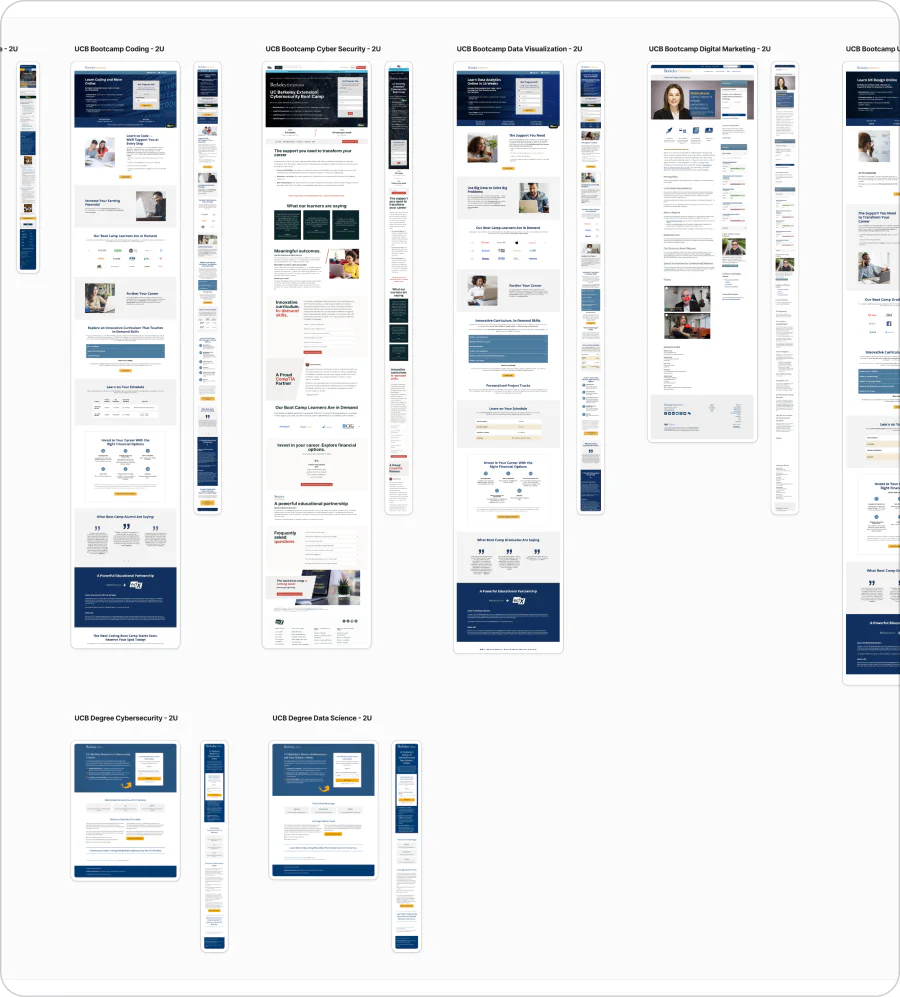
The portfolio had grown by adding page types and local exceptions.
2U · LIVE EXPERIENCE SYSTEM · ORGANIZATIONAL LEVERAGE
More than 1,000 live experiences across 500+ programs made one-off page design impossible to sustain. I led four designers in creating shared templates and rules with content, analytics, and engineering. The system cut design time by up to 75% and supported 10× more testing.
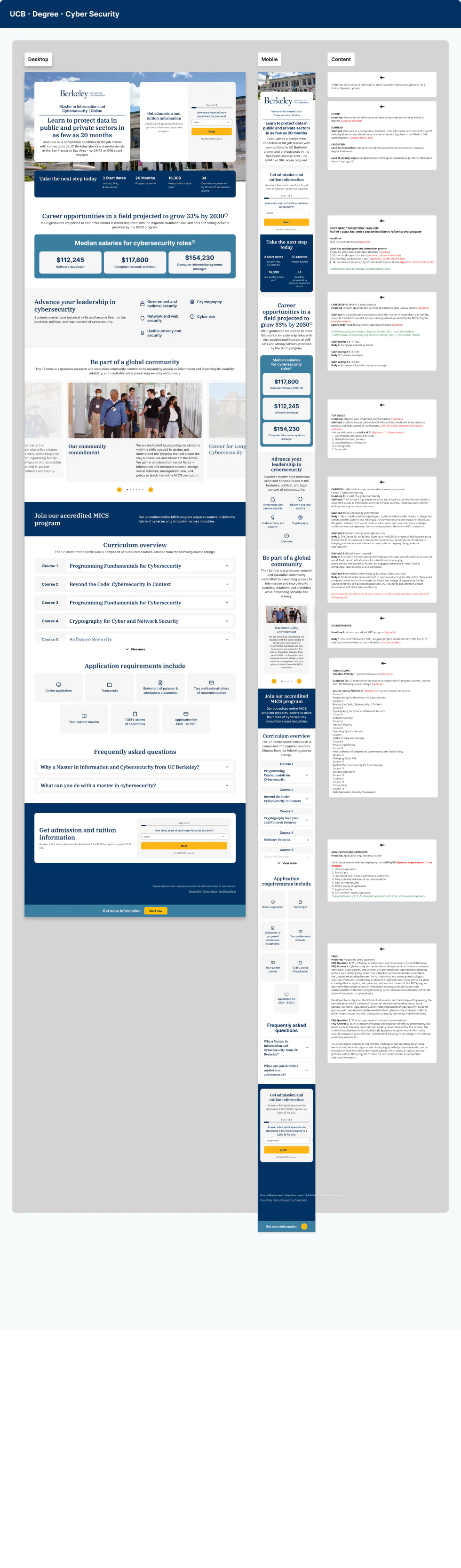
SYSTEM ARCHITECTURE · LIVE PROGRAM + CONTENT RULES
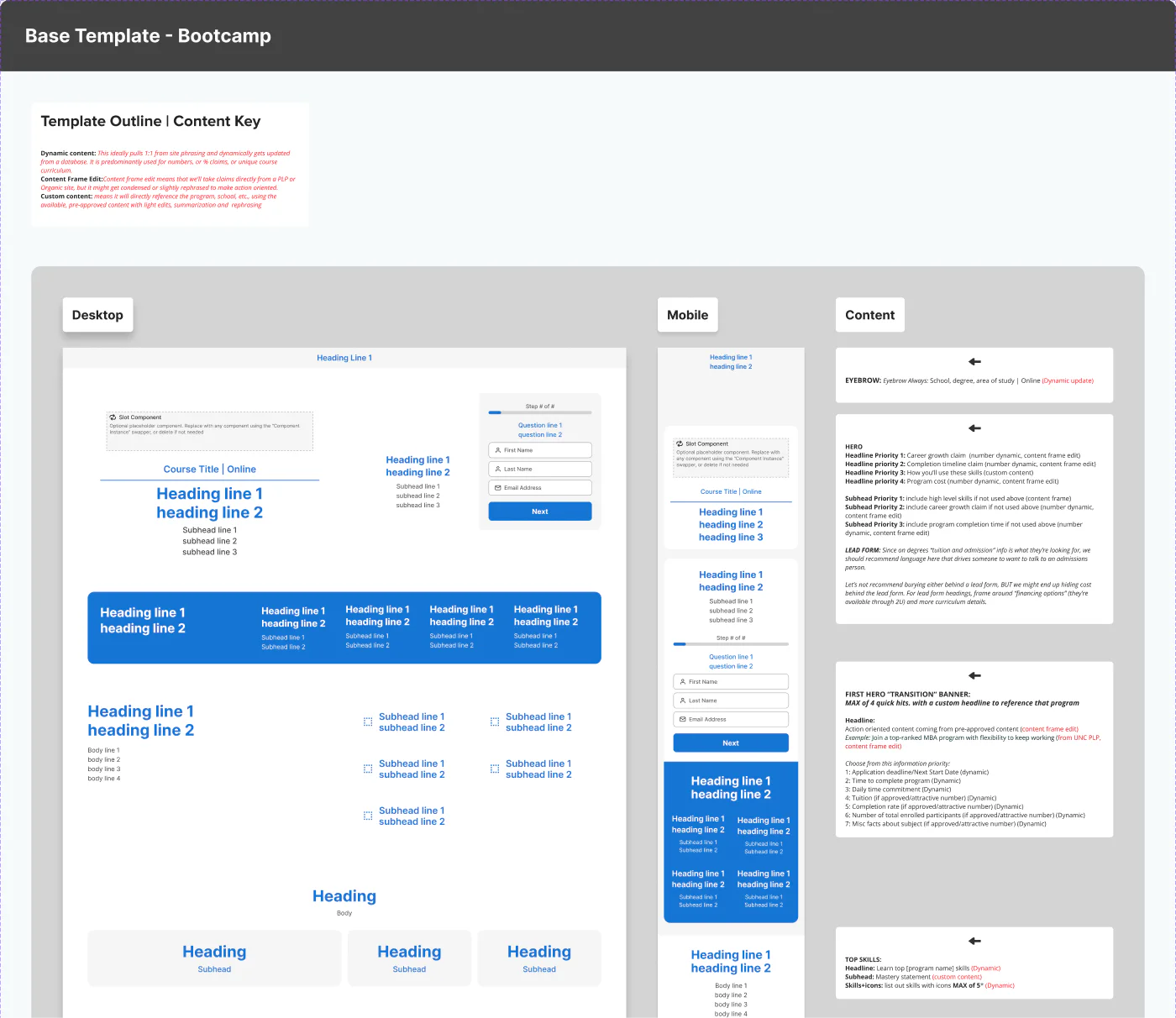
TEMPLATE FAMILIES · ONE GRAMMAR, DISTINCT JOURNEYS

IMPACT
THE SCALE PROBLEM
Every program had real differences in brand, credential, schedule, evidence, and content. Treating each page as a one-off made the work slow and uneven, and very little learning carried from one program to the next.
INITIAL BELIEF
The portfolio had grown by adding page types and local exceptions.
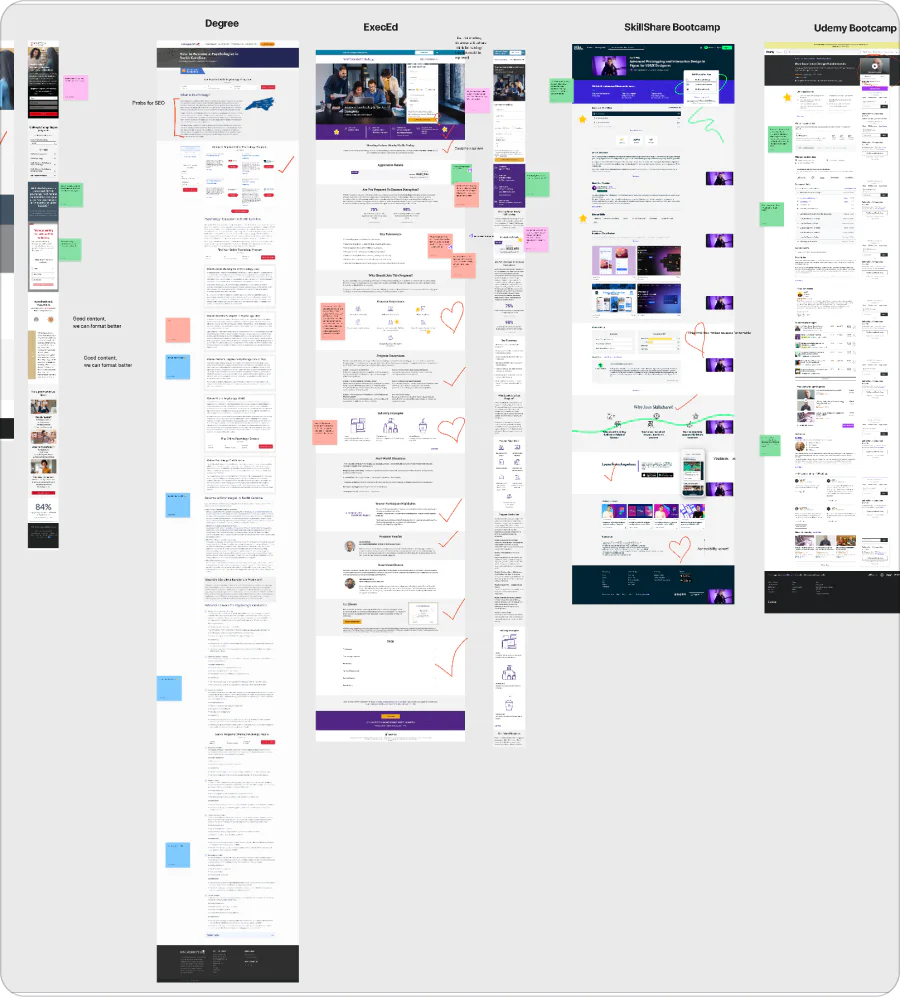
AUDIT EVIDENCE
The audit separated product-specific needs from variation created by legacy production habits.
ARCHITECTURAL DECISION
Stable sequencing, flexible modules, rules over one-offs, and repeatable experiment seams.
THE ARCHITECTURAL SHIFT
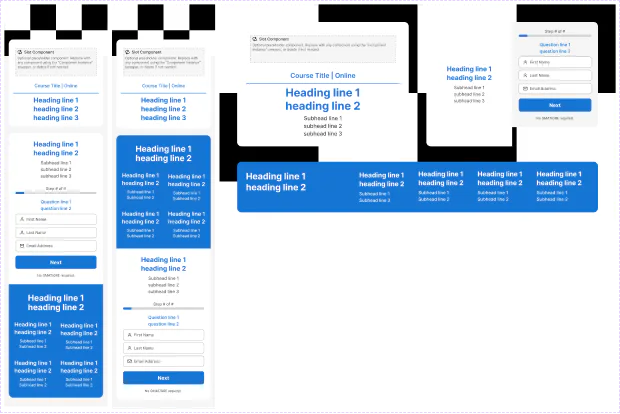
A consistent sequence for orientation, value, proof, outcomes, curriculum, requirements, and conversion.
Sections adapt to product type, available evidence, content depth, and institutional brand.
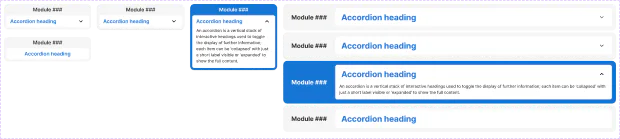
Defined when a module appears, how it behaves, and which variants are appropriate.
Created repeatable places to test messaging, proof, order, forms, and personalization.
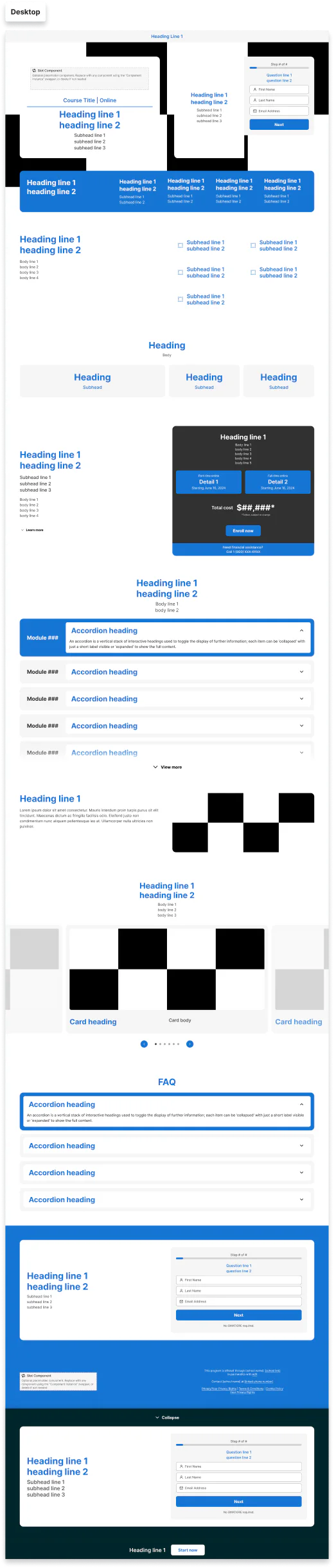
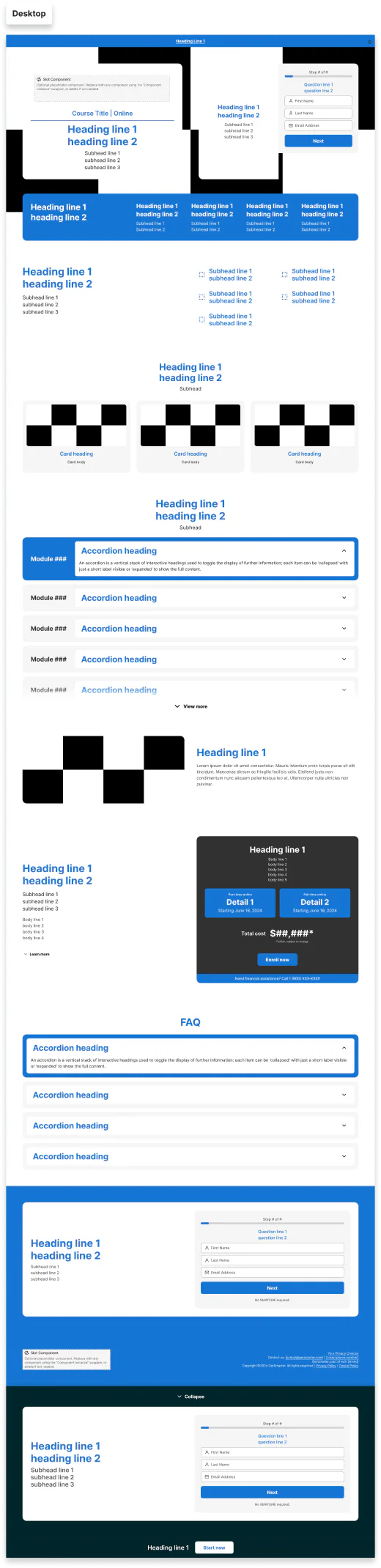
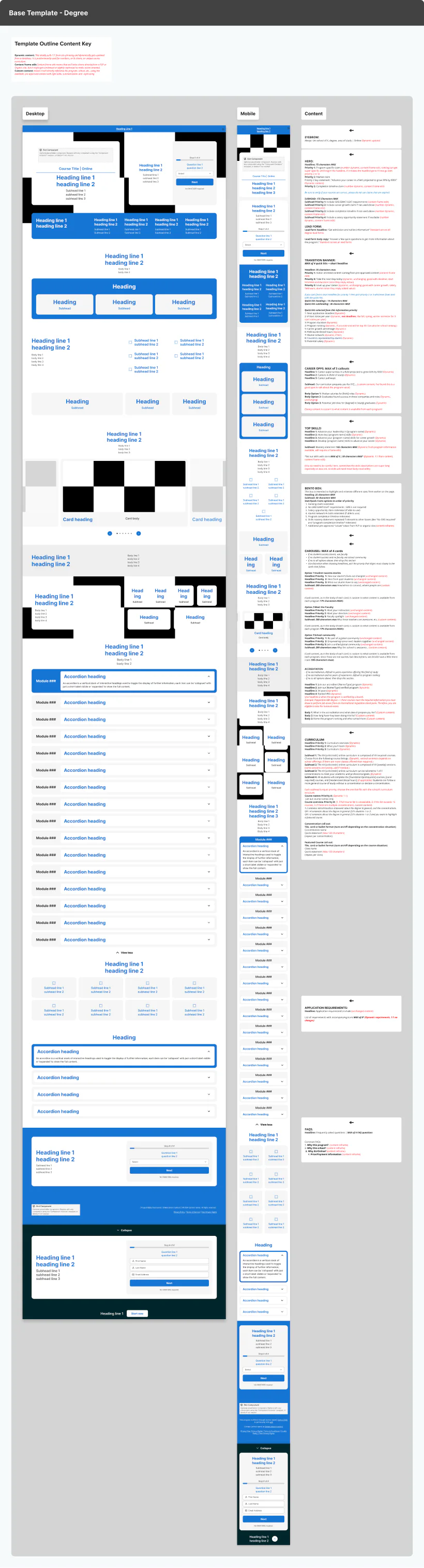
DEGREE
Deep proof, curriculum, requirements, and long-form decision support.
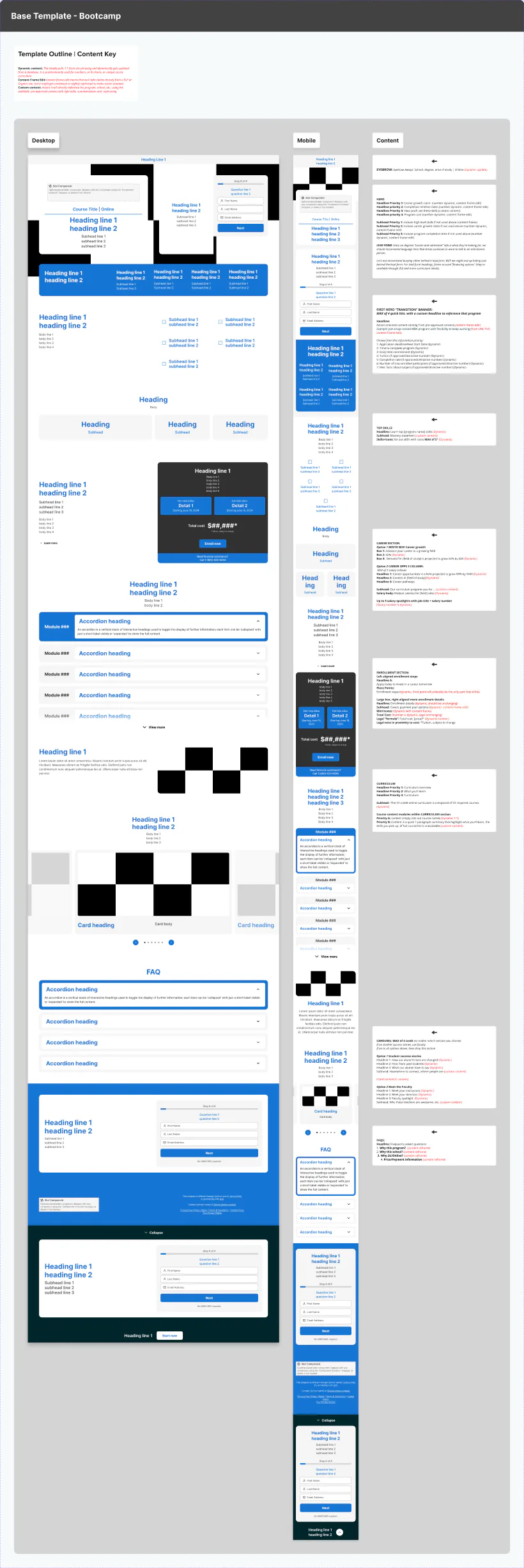
BOOTCAMP
Accelerated outcomes, skills, financing, and a tighter conversion rhythm.
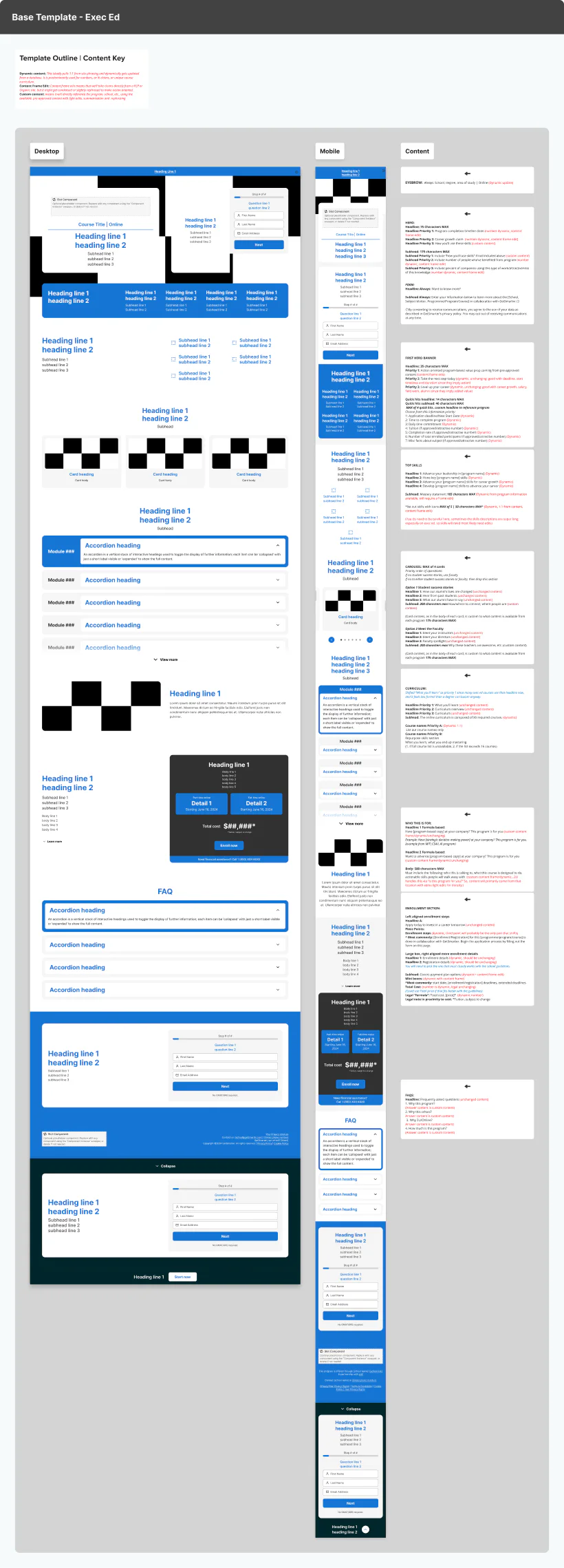
EXECUTIVE EDUCATION
Immediate relevance, schedule, credibility, and concise action.
SCALE WITHOUT GENERICISM
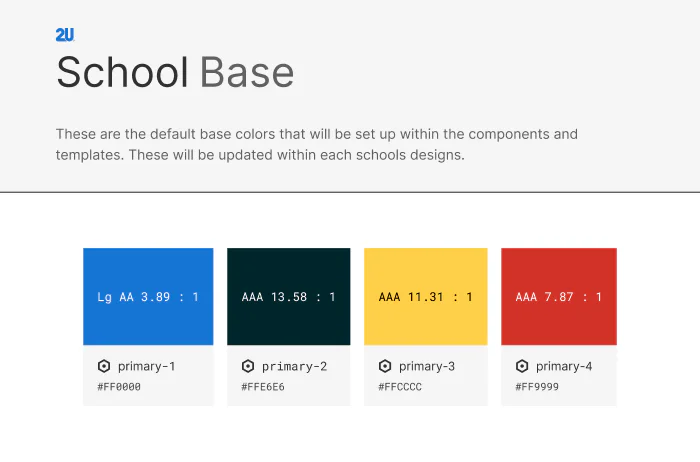
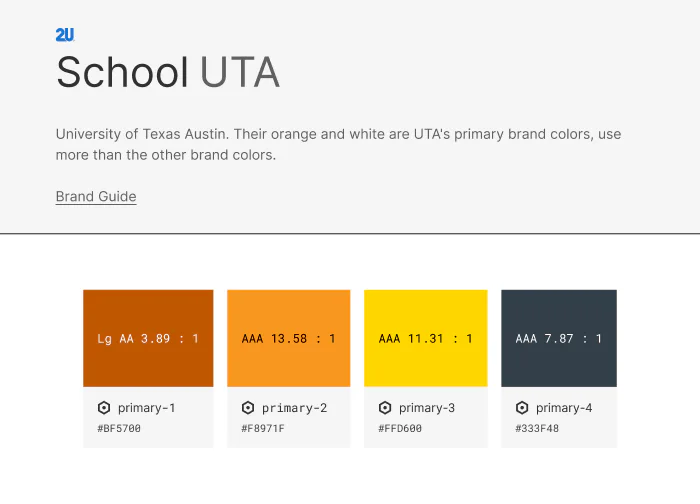
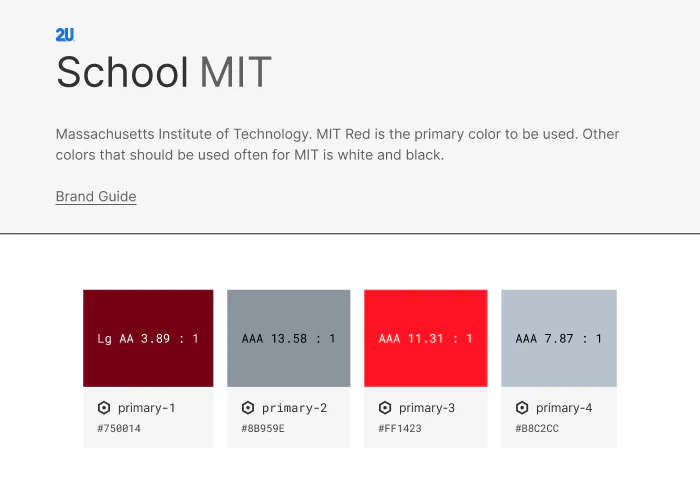
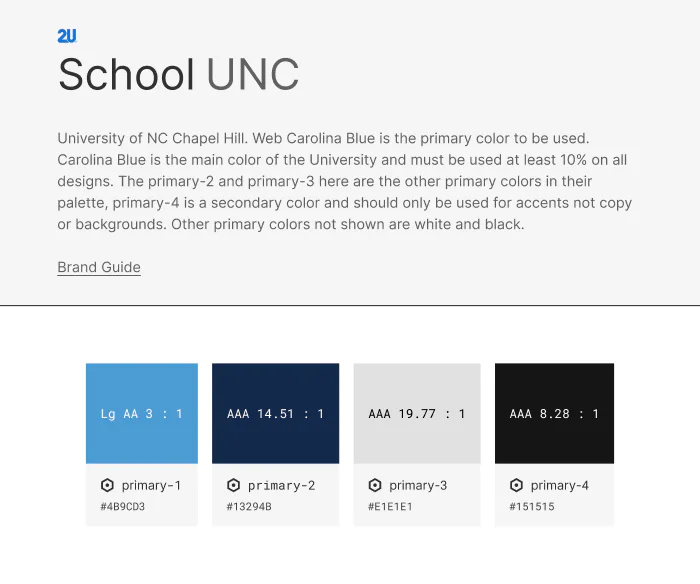
Flexible color, typography, imagery, logos, and module combinations allowed institutional identity to remain visible while shared interaction and production rules did the operational work.
THE SYSTEM CREATED CAPACITY TO LEARN
Because the page structure stayed stable, teams could test the message, evidence, module order, form, or personalization without rebuilding the page each time.
ORGANIZATIONAL LEVERAGE
DESIGN LEADERSHIP
Four-designer workstream
PRODUCT
Roadmap and prioritization
ENGINEERING
Implementation constraints
CONTENT + ANALYTICS
Narrative and experiment evidence
DESIGN SYSTEM
Components, tokens, accessibility
DESIGN LEADERSHIP
I led a four-designer workstream and used regular critique to keep decisions and craft consistent across hundreds of programs.
TEMPLATE GOVERNANCE
Clarified what belonged in the core system, what varied by product family, and what justified a new pattern.
DESIGN-SYSTEM PARTNERSHIP
Connected the page architecture to shared components, tokens, responsive behavior, and implementation constraints.
OPERATIONAL FEEDBACK
We kept revising the templates after launch using production issues and experiment results.
It was giving designers and partners one dependable way to decide, build, critique, and improve work across the portfolio.
THE OUTCOME
The system cut the work required for each new page and gave teams a common way to review, build, and test. Accessibility and program-specific needs were part of the template from the start.